
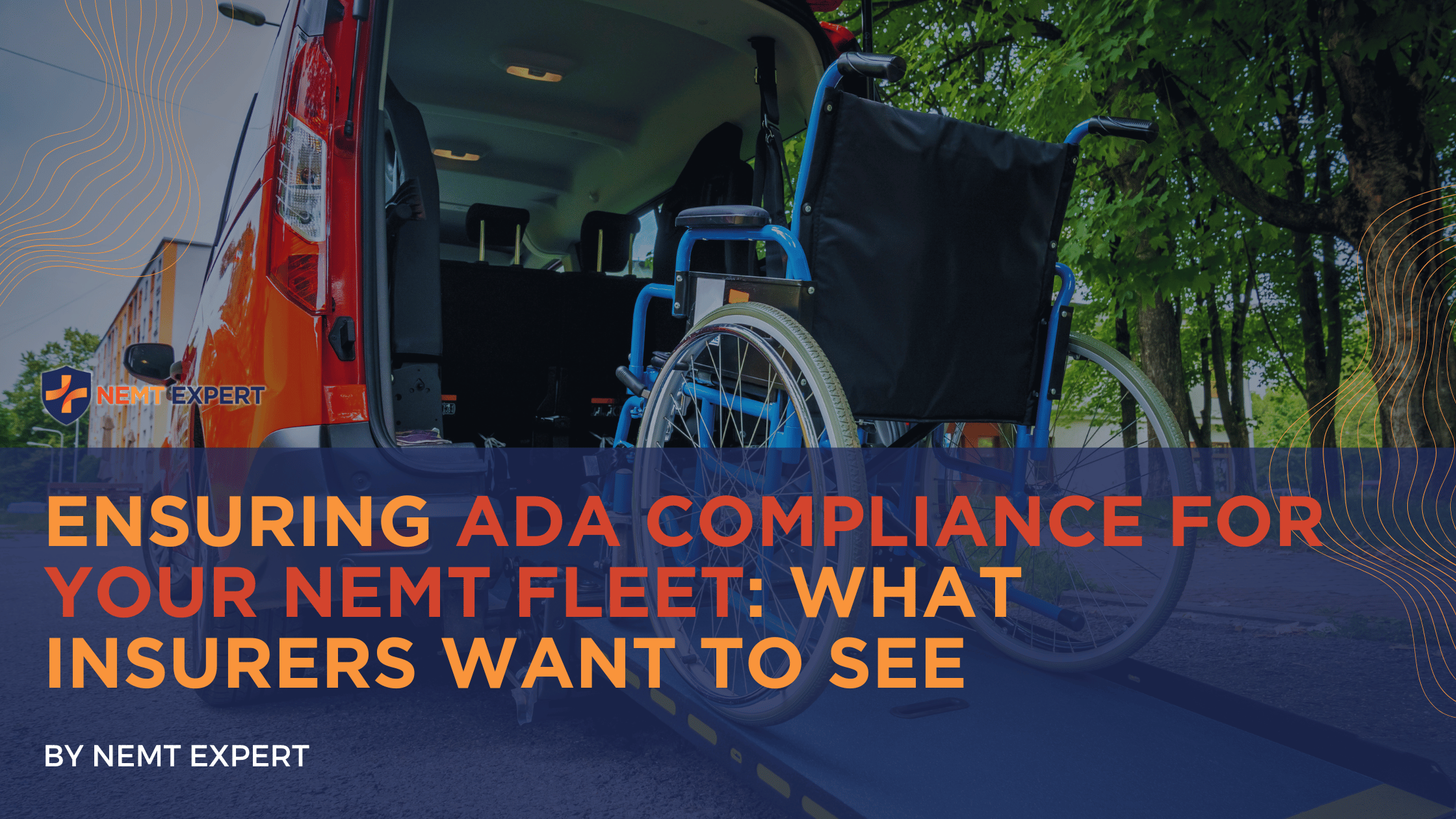
The non-emergency medical transportation (NEMT) industry operates at the intersection of mobility and healthcare. When you serve passengers with disabilities, limited mobility or special needs, ensuring your fleet meets Americans with Disabilities Act (ADA) standards is not just a legal matter—it’s central to your operations, reputation and insurance standing.
In this article, we’ll explore why ada compliance for nemt fleet operations matters to insurers, what they expect to see, and how you can structure your compliance efforts to protect your business, drivers and passengers.
Why ADA Compliance for NEMT Fleet Operations Matters to Insurers
Insurance providers offering coverage for NEMT businesses look beyond mere liability limits. They assess your risk profile—and one of the most critical components of that profile is your accessibility infrastructure and operational standards.
When your fleet lacks ADA-compliant features or your drivers aren’t trained in safe passenger handling, insurers may view you as a higher risk. That can result in higher premiums, stricter terms or even declined coverage. Conversely, demonstrating strong ada compliance for nemt fleet operations can reduce risk, improve your coverage options, and support contract compliance with Medicaid, brokerages or healthcare partners.
What Does ADA Compliance Mean for Your NEMT Fleet?
Vehicle Accessibility and Equipment
Your vehicles must satisfy specific accessibility requirements to support passengers using wheelchairs or mobility aids. Key features include wheelchair ramps or lifts with sufficient load capacity, wide door openings, securement systems, and slip-resistant surfaces.
For example, ramps longer than 30 inches should support at least 600 pounds, and clear platform widths must accommodate the mobility device plus space to maneuver.
Passenger Securement and Space
Adequate space inside the vehicle (e.g., 30 × 48 inches clear floor area) and certified tie-down systems are critical. Securement systems must meet load ratings and be located so the passenger can board, position and ride safely.
Driver Training and Operational Standards
Your drivers must do more than drive—they must assist mobility-impaired passengers, operate equipment (lifts/ramps), and do so with dignity and safety. Training in sensitivity, ADA awareness, securement procedures, and vehicle accessibility features is essential.
Policies, Communication and Documentation
Insurers expect documented policies covering how your company handles accessibility requests, service animals, communication with hearing or visually impaired clients, and how you maintain vehicle accessibility features. They look at your inspection logs, maintenance records, training files and trip documentation.
What Insurance Underwriters Want to See for ADA Compliance
When your broker or underwriting team reviews your business for coverage, these are the key areas they assess:
1. Fleet Specifications and Vehicle Condition
- Are all vehicles equipped with lifts/ramps certified for mobility-device loading?
- Are securement systems inspected, certified and documented?
- Do inspection and maintenance logs exist showing ADA-specific equipment was validated?
- Are there records of repairs, replacements or usage of alternative vehicles when a primary vehicle was out of service?
2. Driver Competency and Training Records
- Proof of routine training in ADA passenger assistance, ramp/lift operations, unloading and load safety.
- Records of driver certifications, refresher courses and driver performance metrics (e.g., complaints, incidents).
- Evidence of driver understanding of mobility device securement, patient safety, and ADA service expectations.
3. Policies for Accessibility and Inclusion
- Published policies covering service animals, assistive devices, communication with clients, and emergency procedures for mobility-impaired riders.
- Process for accommodating requests (wheelchair users, service animals, hearing impaired) and how this is documented in dispatch/trip records.
- Means of communicating accessibility features to clients (websites, booking portals, driver briefings).
4. Documentation, Audits and Compliance Monitoring
- Scheduled internal audits of accessibility equipment and procedures.
- Maintenance of detailed logs (equipment checks, ramp/lift inspections, securement audits).
- Evidence of compliance with written policies and procedures.
- Written corrective action plans when issues were identified.
5. Contractual Requirements and Client Credentials
When providing services for Medicaid, brokers or healthcare facilities, they often require evidence you meet specified accessibility standards. Insurers will review whether your fleet is set up to meet those contracts. Having documented compliance strengthens your underwriter’s view of you as a lower risk.
How to Build a Strong ADA Compliance Program for Your NEMT Fleet
A. Conduct a Fleet Accessibility Assessment
Start by reviewing each vehicle with a checklist aligned to ADA and state standards: ramp/lift load capacity, dimensions, securement systems, clear floor space, slip-resistant surfaces, lighting and handrails. Many resources list the exact specifications your industry should meet.
B. Develop Written Policies and Training Program
Write policies that address accessibility procedures, service animals, communications for hearing/visual impairment, accident reporting involving mobility device users. Then deliver training to staff (drivers, dispatchers, fleet managers) to ensure they’re aware of their role in ADA compliance.
C. Establish Maintenance and Documentation Routines
Set up preventative maintenance calendars specifically for ADA equipment (ramps, lifts, securements). Use fleet management software to track inspections, create alerts for replacements or repairs, and maintain digital logs. Audit frequency could be quarterly or semi-annually.
D. Integrate Accessibility into Your Insurance Review
When you next review your insurance program, bring your ADA compliance materials: fleet spec sheets, training logs, inspection reports. Ask your broker how your ada compliance for nemt fleet operations affect your insurance risk and whether you qualify for preferred rates or endorsements. Demonstrating compliance can position you favorably.
E. Monitor and Update Your Program
Accessibility standards and state regulations evolve. Run bi-annual reviews of your policies, technology, vehicle specs and training curriculum. Stay abreast of state-specific NEMT and ADA regulations that may affect your fleet.
Real-World Scenario: What Happens When Accessibility Isn’t Prioritized
Imagine a NEMT provider scheduled to pick up a wheelchair-user at a senior care facility. The driver arrives but the lift mechanism is inoperable due to a delayed maintenance check. The passenger is delayed, a complaint is filed, and the broker audits the trip and finds the vehicle lacked proper securement logs. The incident triggers a contract review. Meanwhile the insurance carrier notes the vehicle was used despite non-compliance. Result: the claim is partially denied and the insurer raises premiums at renewal.
By contrast, a provider who had documented lift maintenance, trained drivers, and verified securement systems avoided the complaint, passed the audit, and maintained a lower risk classification from their underwriter—keeping premiums stable and contract eligibility intact.
The Business Case: ADA Compliance Equals Risk Reduction
When your ada compliance for nemt fleet program is strong, you can leverage that strength in multiple ways:
- Lower insurance premiums due to reduced risk profile
- Stronger position when bidding for Medicaid or broker contracts
- Fewer complaints, fewer incidents, improved passenger satisfaction
- Better fleet utilization, fewer interrupted trips due to equipment failure
Insurance carriers and brokers will view you as a partner in safety, not a liability. This mindset shift can pay dividends in your overall business health.
Final Thoughts and Next Steps
ADA compliance for your NEMT fleet isn’t a one-time task—it’s an ongoing operational discipline that affects your service quality, contract eligibility and insurance status. By proactively aligning your vehicles, staff, policies and documentation, you not only support vulnerable passengers—you also strengthen your business’s foundation.
Next steps:
- Select one vehicle and conduct the accessibility assessment this week.
- Update or create written accessibility policies and schedule a training session for drivers.
- Meet with your insurance broker and present your ADA compliance materials—ask how they influence your coverage and premiums.
At NEMT Expert, we specialize in pairing robust compliance programs like ada compliance for nemt fleet with tailored insurance solutions built for this industry. Let us help you align your fleet, your contracts and your coverage—so you deliver safe, accessible transportation and maintain peace of mind.
📞 Book a free consultation today and let us review your fleet accessibility, insurance strategy and contract readiness.