
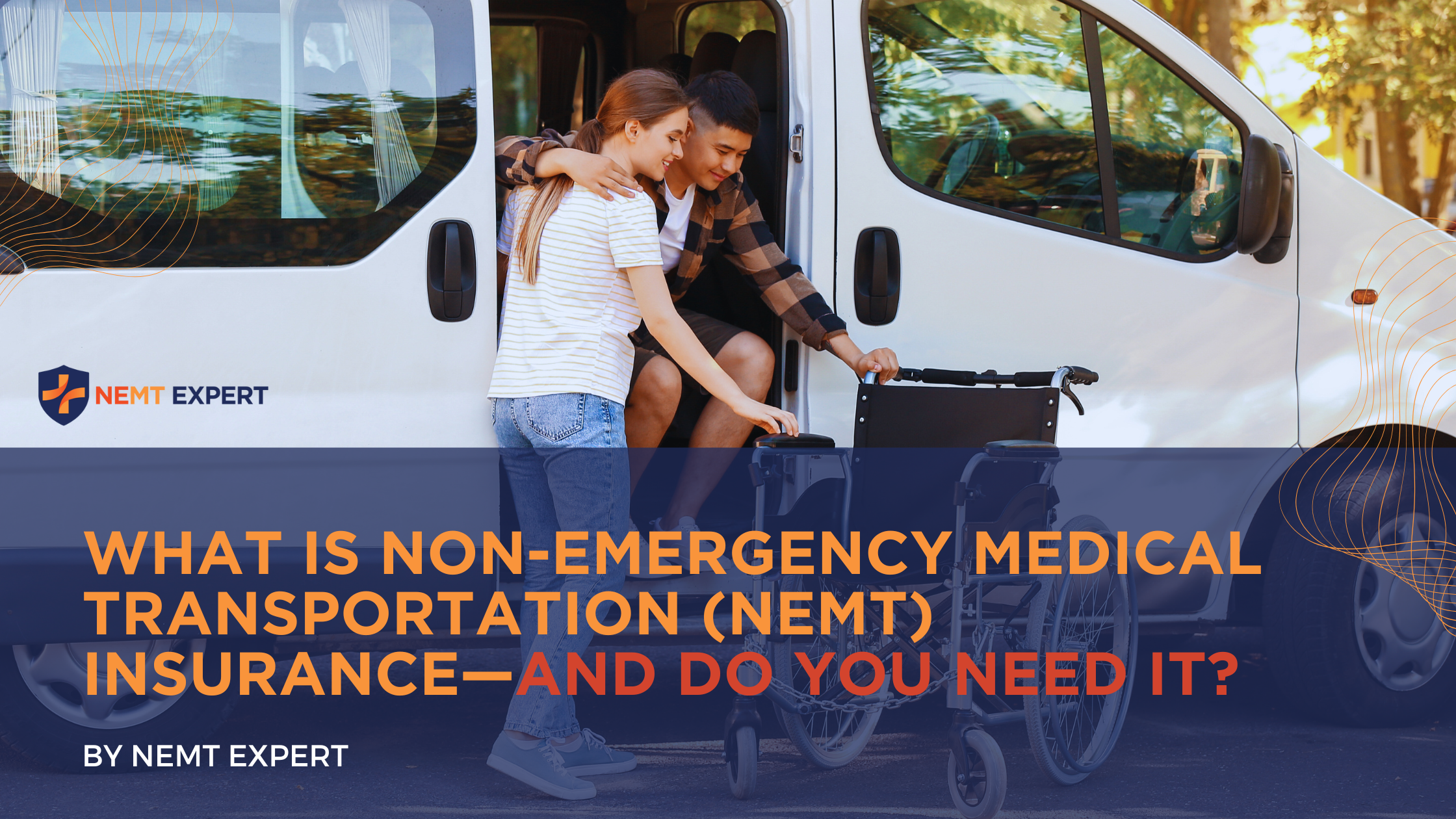
If you operate a Non-Emergency Medical Transportation (NEMT) business, insurance isn’t just a box to check—it’s your first line of defense. From accidents to liability lawsuits, NEMT insurance is a tailored solution to protect your vehicles, drivers, patients, and bottom line. But what exactly is NEMT insurance? Do you really need it if you already have commercial auto insurance? And how do you make sure you’re properly covered?
In this guide, we’ll break down everything you need to know about NEMT insurance, using real-world examples and expert insights. Whether you’re launching your NEMT business or looking to upgrade your current policy, this blog will help you make informed, confident decisions.
What Is NEMT Insurance?
NEMT insurance is a specialized form of commercial insurance designed for companies that transport patients who don’t require emergency medical care. These services typically include rides to hospitals, clinics, dialysis appointments, physical therapy, and other routine healthcare visits.
Unlike standard commercial auto insurance, NEMT insurance provides coverage that reflects the unique risks associated with transporting vulnerable passengers, including elderly or disabled individuals.
Why Standard Commercial Auto Insurance Isn’t Enough
Many new providers make the mistake of assuming a general business auto policy will do the job. Here’s why that’s risky:
- It may exclude patient transport. Most basic policies do not allow for human passenger transport for medical purposes.
- Higher liability exposure. NEMT vehicles often carry passengers with mobility challenges, increasing the risk of injury.
- Medical equipment coverage. NEMT insurance can include protection for wheelchairs, ramps, lifts, and more.
Choosing the right insurance ensures you’re not left exposed to lawsuits, denied claims, or regulatory violations.
Core Coverages in NEMT Insurance
A well-structured NEMT insurance policy includes several coverage types:
1. Commercial Auto Liability
Covers bodily injury and property damage caused by your vehicles. This is often the legal minimum requirement.
2. General Liability Insurance
Protects against non-vehicle related claims, such as slips and falls while entering a van.
3. Professional Liability
Also known as “errors and omissions” coverage. This is critical if your staff assists patients in/out of the vehicle.
4. Physical Damage Coverage
Covers damage to your own vehicles from collisions, vandalism, or weather events.
5. Workers’ Compensation
If you have employees, this covers injuries that happen on the job.
6. Sexual Abuse & Molestation (SAM) Coverage
A specialized form of protection given the sensitive nature of transporting vulnerable populations.
7. Excess/Umbrella Liability
Adds an extra layer of protection once your primary liability limits are exhausted.
Who Needs NEMT Insurance?
You likely need NEMT insurance if your business:
- Transports patients to medical appointments
- Works with Medicaid or Medicare programs
- Is registered as a healthcare transportation provider
- Uses wheelchair vans, stretcher vans, or other medical-capable vehicles
Types of organizations that typically require this insurance include:
- Private NEMT companies
- Paratransit fleets
- Healthcare centers with patient transport services
- Non-profits providing ride programs for seniors
How Much Does NEMT Insurance Cost?
The cost of NEMT insurance varies based on:
- Fleet size and vehicle types
- Driving records and claim history
- Location and state regulations
- Services offered (e.g., wheelchair vs. ambulatory)
- Coverage limits and deductibles
Pro Tip: Bundling coverages with a provider like NEMT Expert often leads to better rates and simplified billing.
Real Risks of Being Underinsured
Scenario 1: The Lift Malfunction
A patient is injured because your wheelchair lift malfunctions. Without NEMT-specific liability coverage, you could be liable for six figures in damages.
Scenario 2: Driver Negligence
Your driver accidentally leaves a client unattended. A lawsuit follows, and your standard policy refuses the claim due to lack of professional liability coverage.
Scenario 3: Denied Medicaid Contracts
You apply to be a Medicaid vendor but fail to show proof of adequate insurance. You lose the contract.
Compliance and Regulatory Requirements
States and Medicaid programs often have minimum insurance standards that NEMT providers must meet, including:
- Minimum auto liability limits (e.g., $1 million combined single limit)
- Workers’ compensation for W-2 employees
- Professional liability certificates
- SAM coverage for vulnerable passenger protection
Not having proper documentation can prevent you from operating legally or billing for services.
Why NEMT Expert Is the Go-To Agency for Coverage
At NEMT Expert, we don’t just sell insurance—we specialize in it.
- Exclusive programs for NEMT and paratransit businesses
- Access to multiple carriers with industry-best rates
- Knowledgeable agents who understand your unique needs
- Quick quote process and compliance-focused support
We help you get covered fast, stay protected, and grow with confidence.
Get the Right Coverage in 3 Easy Steps
- Request Your Custom Quote — No obligation, tailored to your operation.
- Review Your Policy Options — We’ll walk you through every detail.
- Get Covered & Compliant — Peace of mind for your business, staff, and riders.